

The FDA wants the DEA to treat 7-OH like heroin. We’re making the case for a smarter path: evidence-based regulation that protects consumers without ignoring adult choice.
7-OH has become the latest test of whether policymakers will follow evidence or headlines. The answer to a poorly understood market is not to push consumers into the shadows, but to set clear rules that make products safer, labels honest, and bad actors easier to police.
Scheduling 7-OH like heroin would not make consumers safer. It would remove legal safeguards, erase accountability, and push adults toward products that are harder to test, label, or regulate.
A smarter framework can protect consumers while preserving adult choice: age verification, honest labeling, third-party testing, product standards, and enforcement against unsafe or deceptive products.
This paper argues against scheduling 7-OH as a Schedule I substance and explains why prohibition would do more harm than good.
Prohibition drives consumers to unregulated markets, undermines safety, and denies adults access to lawful choices.
Instead, we propose a smarter regulatory framework that protects consumers, enables innovation, and preserves adult access.
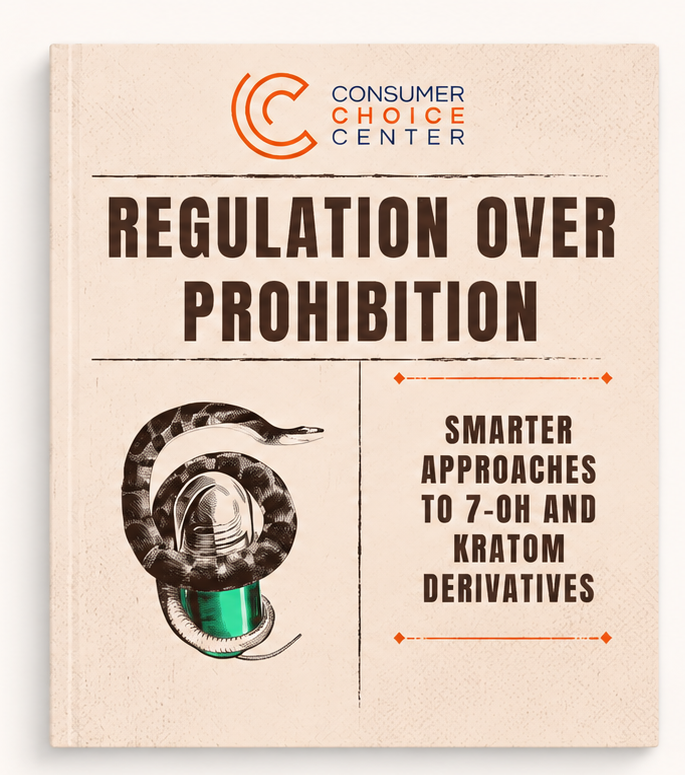
Browse CCC’s 7-OH advocacy work, including press releases, media hits, open letters, and opinion pieces.
Watch CCC’s latest videos on 7-OH, consumer choice, and the case for regulation over prohibition.
The FDA is moving to schedule 7-hydroxymitragynine as a controlled substance. If it goes through, millions of Americans lose access overnight — including people managing chronic pain, veterans with PTSD, and individuals using it to get off opioids.