


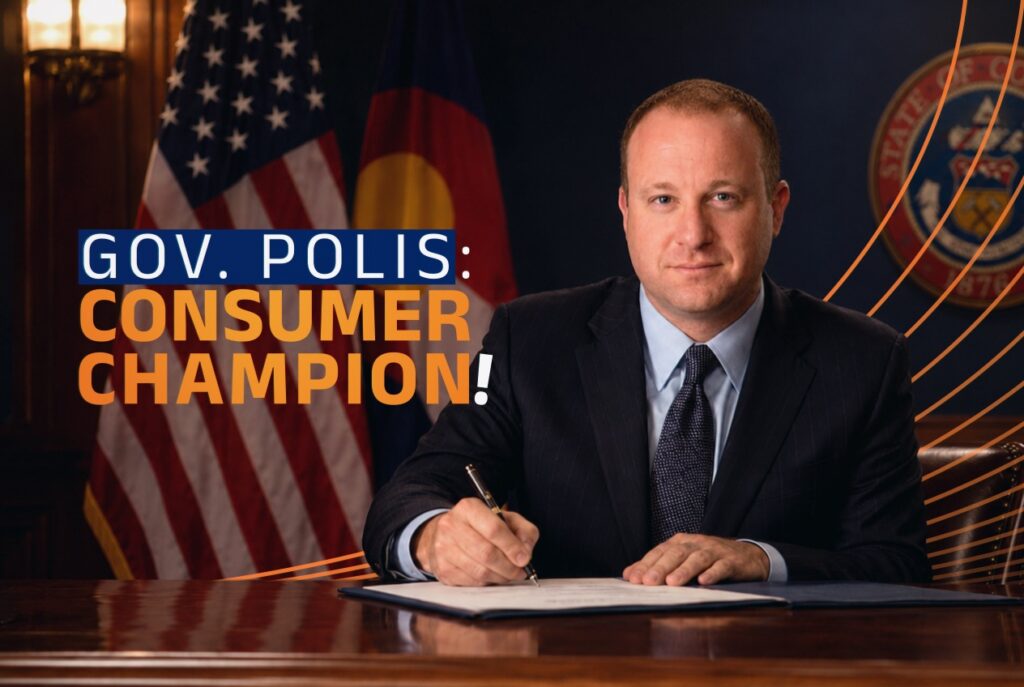
Colorado Governor Jared Polis just gave consumers two of the best gifts of the 2026 legislative session, and he did it with his veto pen.
By rejecting HB26-1236 (arbitration reform) and SB26-134 (the credit card swipe fee bill), Polis cemented a record that already makes him one of the most consumer-friendly governors in the country, and proved, once again, that defending Coloradans sometimes means defending them from their own legislature.
The Consumer Choice Center recognizes and celebrates the Governor’s efforts as he nears the final months of his second term.
A Maverick Governorship
Polis has spent seven years governing the way he campaigned: pragmatically, with an obsession over affordability and the cost of doing business in Colorado.
He turned the state into a magnet for tech, biotech, and outdoor recreation companies, defended its tourism industry against tax raids and overregulation, and refused to confuse “protecting consumers” with raising their costs. Polis signed legislation cutting personal income tax rates while also publicly campaigning for dropping it to zero, and has reduced licensing costs for regulated professions.
These are the affordability policies that matter.
Since Polis became governor in 2018, Colorado has consistently ranked in the top 10 nationally for economic performance, with per capita personal income reaching $82,705 in 2024 — ninth-highest in the country — and one of the fastest 15-year growth rates in GDP, jobs, and population of any state. This is a commendable tenure.
As a personal favorite, Polis signed SB24-020 in May 2024, making to-go cocktails and alcohol delivery permanent in Colorado — a pandemic-era consumer convenience that he fought to keep on the books even after most other states let theirs expire.
Where other governors sign whatever crossed their desk, Polis also kept a sharp eye on whether Colorado would still be a state where startups want to launch, families want to fly into Denver for a vacation, and small businesses can keep their doors open. He’s earned a national reputation for it, and never more than this session.
At the Consumer Choice Center, we’ve watched Polis use the veto pen and leadership in defense of affordability, innovation, and consumer choice for years. This session set a personal record: 12 vetoes and counting. Two of them mattered most for the Coloradans we represent, and we urged him to issue both.
The top 5 bills Polis vetoed this session
- HB26-1236 — Arbitration reform. Would have dismantled the arbitration framework underpinning ride-share, food delivery, fintech, telehealth, and gig platforms in Colorado, exposing them to a state-specific litigation tax and federal preemption challenges.
- SB26-134 — Credit card swipe fees. Would have banned interchange fees on the sales tax portion of card transactions and gutted the rewards programs millions of Coloradans rely on for cash back, miles, and travel credits.
- HB26-1210 — “Surveillance pricing” ban. Would have outlawed personalized pricing and discounts based on user data. Polis warned it would “inadvertently discourage discounts for consumers.”
- SB26-146 — Plastic utensil ban. Would have barred restaurants and delivery services from automatically providing single-use utensils and condiments. Polis said the state shouldn’t mandate that choice.
- HB26-1418 — Video game transaction fee. Would have imposed a new state fee on every in-game add-on purchase to fund unrelated programs, a stealth tax on “digital storytelling and artistic expression.”
Understanding Harm to Consumers
What’s striking about both vetoes is how clearly Polis described the harm. On HB26-1210, he warned the policy would “inadvertently discourage discounts for consumers.” On SB26-134, he wrote that the legal risks “outweighed the limited upside for small businesses.” On HB26-1236, he understood that hiking liability costs for innovative platforms doesn’t protect consumers, it prices them out.
This is what a pro-innovation, pro-consumer governor sounds like.
Polis has governed the way he campaigned: skeptical of mandates, alert to the difference between a policy that helps consumers and a policy that just sounds like it does. Colorado is a wealthier, more competitive, more tourist-friendly state for it. Residents have been luck to have a governor focused on the right issues and appropriate use of his powers.
An example for the nation’s governors
As the chief executive of the State of Colorado, Polis has handled policy issues as a pragmatist and a realist, understanding that not every problem or issue can be solved through government action. Other governors should be taking notes, and other state legislatures should think twice before sending up bills that hide their costs in the fine print.
To Gov. Polis, on behalf of Colorado consumers: thank you. The rewards points, the ride-share apps, the food delivery, the telehealth visits, the personalized discounts, they’re still there because you stood between Coloradans and a session that didn’t always know better.
That’s what a consumer champion looks like.