The consumer case against tariffs on steel, aluminum, and copper
Introduction
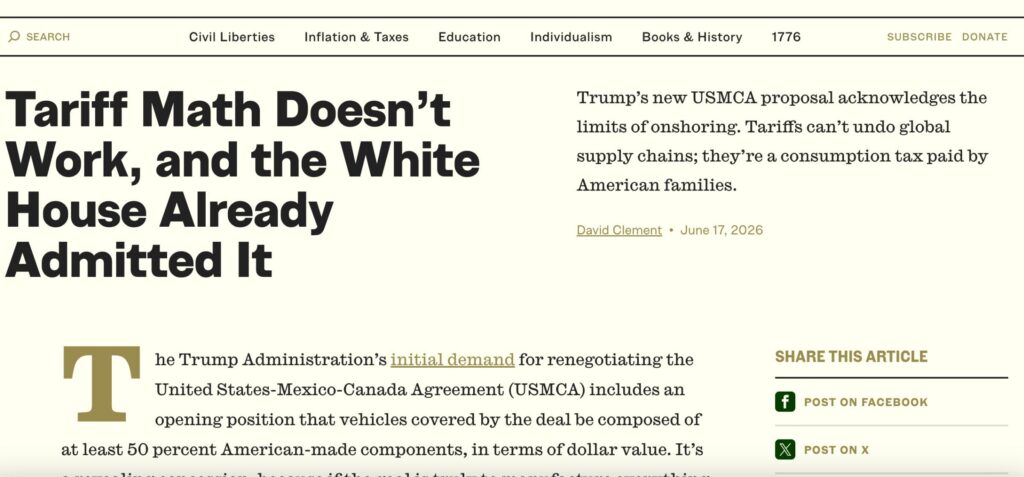
Tariffs on steel, aluminum, and copper are sold to the public based on two promises: bringing manufacturing back to the United States and raising revenue. The problem is that these two goals are mutually exclusive. If tariffs succeed in reshoring production, revenue derived from tariffs on imports would bottom out. If revenue were to stay so high that the Administration could end the income tax (as has been suggested) the US economy would have to be entirely driven by foreign imports, thus defeating the reshoring goal. You simply cannot have your cake and eat it too on tariffs and on restoring U.S. domestic manufacturing.
GOAL 2
Raise tariff revenue
Revenue requires imports to stay high or grow…
…which runs directly counter to onshoring.
GOAL 1
Bring back American manufacturing
If it works, imports fall toward zero…
…and tariff revenue falls to zero with them.
What tariffs reliably do instead: act as a tax paid by domestic consumers, inviting retaliation from economic allies like Canada and Mexico — a tit-for-tat cycle that harms American production, innovation, trade and foreign policy.
Key Takeaways
Tariffs are a tax on Americans. Steel, aluminum, and copper tariffs are particularly egregious because they touch so many everyday essentials — cans, cars, appliances, homes.
Costs pass straight through. The USITC found a near-100% pass-through rate in year one; peer-reviewed research this year puts the consumer share at 96–100%.
Allies are collateral damage. Canada is America’s largest foreign supplier of steel and aluminum; Mexico is the second-largest steel supplier and third-largest aluminum partner. Middle Eastern alternatives are imperiled by regional instability.
The way forward is eliminating tariffs. Short of that: taxing components rather than the full product value would be an improvement over the status quo. Exempt key defense products, restore Canada/Mexico exemptions, and give markets a genuine sense of stability.
When a tariff is imposed, industry doesn’t pay it — consumers do. A study of the 2018 tariffs found that higher prices were borne entirely by US importers and consumers, not foreign companies. And tariffs don’t just raise prices on imports: by limiting the pool of producers, they let domestic firms raise prices too.
Appliances: $30–$100 in added material costs per appliance, passed through nearly in full per the USITC.
RVs: Elkhart County, Indiana builds ~80% of the world’s RVs; with over a thousand pounds of steel in an average travel trailer, the industry warns prices could rise more than 25%.
Housing: 94 million households (70%) can’t afford a $400,000 home — and the median new home is $460,000. Incomes would need to be 80% higher than in 2020 to comfortably buy.
Producers, Jobs, and Defense
Tariffs are sold as a jobs program, but the jobs they protect are dwarfed by the jobs they endanger. Every dollar of tariff not passed to consumers drags on business profits, cutting investment and capital expenditure — and constant rule changes push companies into a “wait and see” freeze.
Real companies, real losses: Thor Industries, the world’s largest RV maker, reported a 470-basis-point margin compression and 25% drop in North American shipments, citing tariff-driven material costs. BRP faces over $365 million in added costs this year on Canada/Mexico-built vehicles. Alcoa has already paid $115 million in tariffs.
Buying American is penalized: a 10% charge still applies to foreign products made with US steel — punishing foreign manufacturers for choosing American inputs.
Retaliation bites: Ontario — the world’s largest buyer of US alcohol through its monopoly wholesaler — banned US alcohol sales, cutting Kentucky bourbon producers off from their largest international buyer.
Defense is exposed: the US imports half of all its aluminum, which goes into military electronics, aerospace, combat aircraft, and lightweight armor. A 25% full-value tariff leaves the defense industry struggling to meet its needs.
The Way Forward
The best way forward is to eliminate tariffs on steel, aluminum, and copper entirely and let the market improve alliances and serve consumers. Short of full elimination, these steps would spare consumers the worst:
Tax components, not products. Return to applying tariffs only to the metal content rather than the full value of a finished product.
Exempt critical sectors. Eliminate aluminum duties for the defense industry.
Restore ally exemptions. Reapply country exemptions for Canada and Mexico — especially heading into the July 2026 USMCA review.
End the uncertainty. Publish a clear, trustworthy plan for tariff application so businesses can invest instead of waiting and seeing.
The Bottom line
Tariffs cannot simultaneously onshore production and raise revenue — but they reliably raise prices, cost jobs, and alienate allies. Americans pay more for groceries, cars, appliances, and homes so politicians can claim symbolic victories. These artificially created price hikes make American consumers poorer overall and are inherently regressive.