


The Ultra-Processed Foods Misinformation Crusade in the US and Canada
Paternalistic public policies are one of those rare subjects that both the left and the right often agree on. While each side of the political spectrum has different visions for how people should live their lives, they both often agree that they know better about how those lives should be lived. What is even rarer is when both sides come together for paternalistic public policy and agree on the way people should live their lives. This is exactly the policy landscape that the conversation surrounding ultra-processed foods (UPFs) finds itself.
In the United States, oft-bitter rivals President Donald Trump and California Governor Gavin Newsom agree on at least one thing: that ultra-processed foods are so bad that policies should be made to save people from consuming them. Unfortunately, Trump (through his Secretary of Health and Human Services Robert F. Kennedy Jr. and his Make America Healthy Again initiative) and Newsom are both working with very little, and unreliable, information to enact these laws.
Experts can’t decide on one clear definition of what a UPF actually is. Research has found that both consumers and nutrition experts struggle to consistently identify which foods meet the criteria for being “ultra-processed”. Despite this uncertainty, around 65% of Europeans believe that UPFs are bad for their health, while the European Union itself is still struggling to define what an ultra-processed food actually is. RFK Jr. has been holding a consultation to try and figure out what UPFs actually are, and has indicated that once they have finally come up with a definition, then the next step is front-of-package labeling.
It is highly concerning for any policy-minded person to see policies being announced, and fear mongering being perpetrated, about something science can’t even define. In 2025, Newsom signed the Real Food, Healthy Kids Act, which provided a definition (that is not approved federally) of UPFs and mandated that schools must begin phasing out UPFs in 2029-2035. The definition as written can include foods like whole-grain bread and flavoured yogurt, which are certainly not products that people usually associate with ultra-processed foods. This means the definition is not good enough to use as a foundation for policy.
One may think this bad policy-making is something only Americans and Europeans have to contend with, but Canada is not immune. In fact, Canada is looked at as a leader among its peers as one of the first countries to mention ultra-processed foods back in 2019 in their food guide as being something people should avoid eating, even before the United States began its crusade against UPFs in earnest.
More recently, Canada has very quietly instituted a front-of package labelling policy for all food products being sold to Canadians beginning in January 2026. When Canadians go to the store, they are confronted by a Health Canada-branded, magnifying glass wielding notice on the front of their package warning them the product is high in saturated fats, sugars, and/or sodium. The argument that the Government of Canada has made for attacking UFPs is that it is a cause of chronic illness, although the evidence linking UPFs to poor health is far from conclusive. Systematic reviews show that many studies reporting associations between UPFs and disease rely on observational data rated as low or very low quality. This means it cannot prove that UPFs cause disease. The latest review of research found that the UPF category adds little scientific value when assessing links between diet and disease.
So, why is Canada presenting RFK Jr. a model of front-of-package labelling on a silver platter that he can use to show a success story and a foundation for America’s own policy aims? This is problematic for two main reasons: one, UPFs are so misunderstood, and the discourse surrounding them is so misinformed, that no solid policy should be formed on that kind of shoddy scientific foundation. Second, determining if something is “high in sodium”, for example, is in and of itself political. What is an appropriate amount of sodium is something that varies from person to person. For someone with a sodium deficiency, a product marked as “high in sodium” on front-of package labelling might be the perfect amount of sodium for that individual. For others, it might indeed be too high, but that is a determination that is personal to each individual.
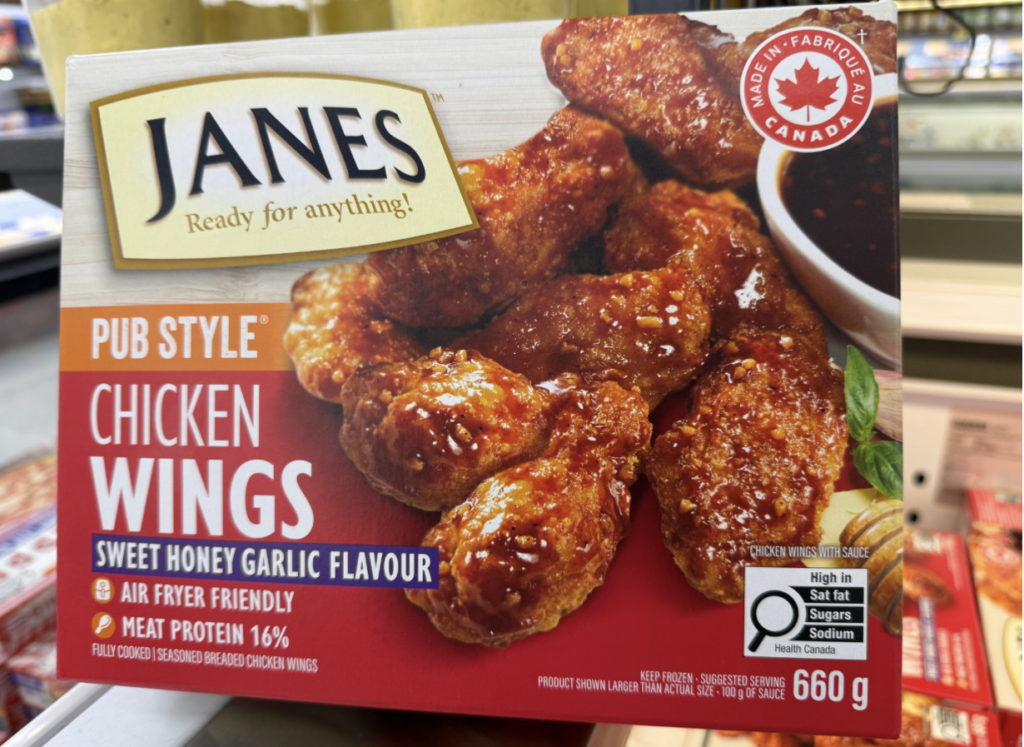
Nutrition is subjective: each person has to contend with their own genetic makeup, their own medical issues, and their own diets that they may be following. To lump everyone into the idea that this subjective amount of sodium is too much sodium is ridiculous when you think about the many different humans that are living different lives within the same country that is trying to tell them what is best for them. And yet, entire health policy initiatives are being created on the back of misinformation, a lack of data, and quite simply, health vibes.
Making nutrition feel like a moral good or a moral failing is unnecessarily punitive, and doesn’t make sense given the inability to actually define UFPs. Food itself is not good or bad, it is just food. Policy makers must take heed of this before declaring war on the diets of the public because the consequences of those actions can destroy people’s relationships with food and how they feed their families. There is also much to say about how paternalism not only harms the individual’s ability to live their best life, but is often always the most harmful to lower-income individuals. I discuss this topic on my other blog. However, consumers should heed government policies that are presented for their own good, because no one knows what is best for a person more than the person themself.